

Self-Rehabilitation & Digital Health Solutions for PwD: Empowering People with Disabilities (PwD) through prosthetics, orthotics, assistive technologies, Virtual Reality (VR) Mirror Therapy, and holistic psychosocial support.
Measurable outcomes achieved across clinical partner centers, healthcare staff TOT workshops, and PwD participant trials.
Empowering PwD via prosthetics, orthotics, biomechanics guidance, and autonomous self-care skills.
VR Mirror Therapy & immersive distraction modules for stroke survivors, trauma, and chronic pain patients.
Caregiver guidance, disability legal rights, emotional resilience, and peer support groups.
Focusing on Prosthetics, Orthotics, Gait Biomechanics, and Device Selection
Assoc. Prof. Ir. Dr. Nasrul Anuar bin Abd Razak
Faculty of Engineering / Biomedical Engineering
8 Core Activities
100% Execution Achieved
50 PwD Participants
Year 1 Target Successfully Reached
20 University Volunteers
10 UM & 10 UniSZA Students
Virtual Reality Mirror Therapy & Immersive Distraction Modules
Dr. Nur Afiqah Hashim
Faculty of Engineering / Biomedical Engineering
VR Mirror Therapy shifts cognitive focus away from pain stimuli and activates mirror neuron pathways to improve upper limb motor control and emotional engagement in stroke and trauma survivors.
"The Role of Virtual Reality-Based Mirror Therapy in Stroke Rehabilitation: A Systematic Review" – Submitted to European Journal of Physical and Rehabilitation Medicine.
Holistic Community Engagement, Disability Protocols & Peer Support Groups
Caregiver & Counseling Support Team
Multidisciplinary Counseling & Legal Policy Experts
Interactive Dialogue
Discussing government policies & funding
Psychosocial Support
Communication & disability rights
Peer Circles
Coordinating support without researcher presence
Click any myth below to uncover evidence-based realities taught during BeABLE workshops.
Reflections from stroke survivors, physiotherapists, and clinical collaborators.
"Using the VR mirror therapy made my rehabilitation exercises enjoyable instead of painful. I felt motivated to keep moving my hand and wanted to play again."
"The TOT session equipped our therapists to operate the VR system independently. It serves as an incredible complementary tool for pain distraction and patient compliance."
"Bringing together biomedical engineering and clinical health sciences allowed us to address both physical device fitting and psychological motivation seamlessly."
Capturing patient engagement across VR Mirror Therapy trials, clinical TOT workshops, and inter-institutional visits.
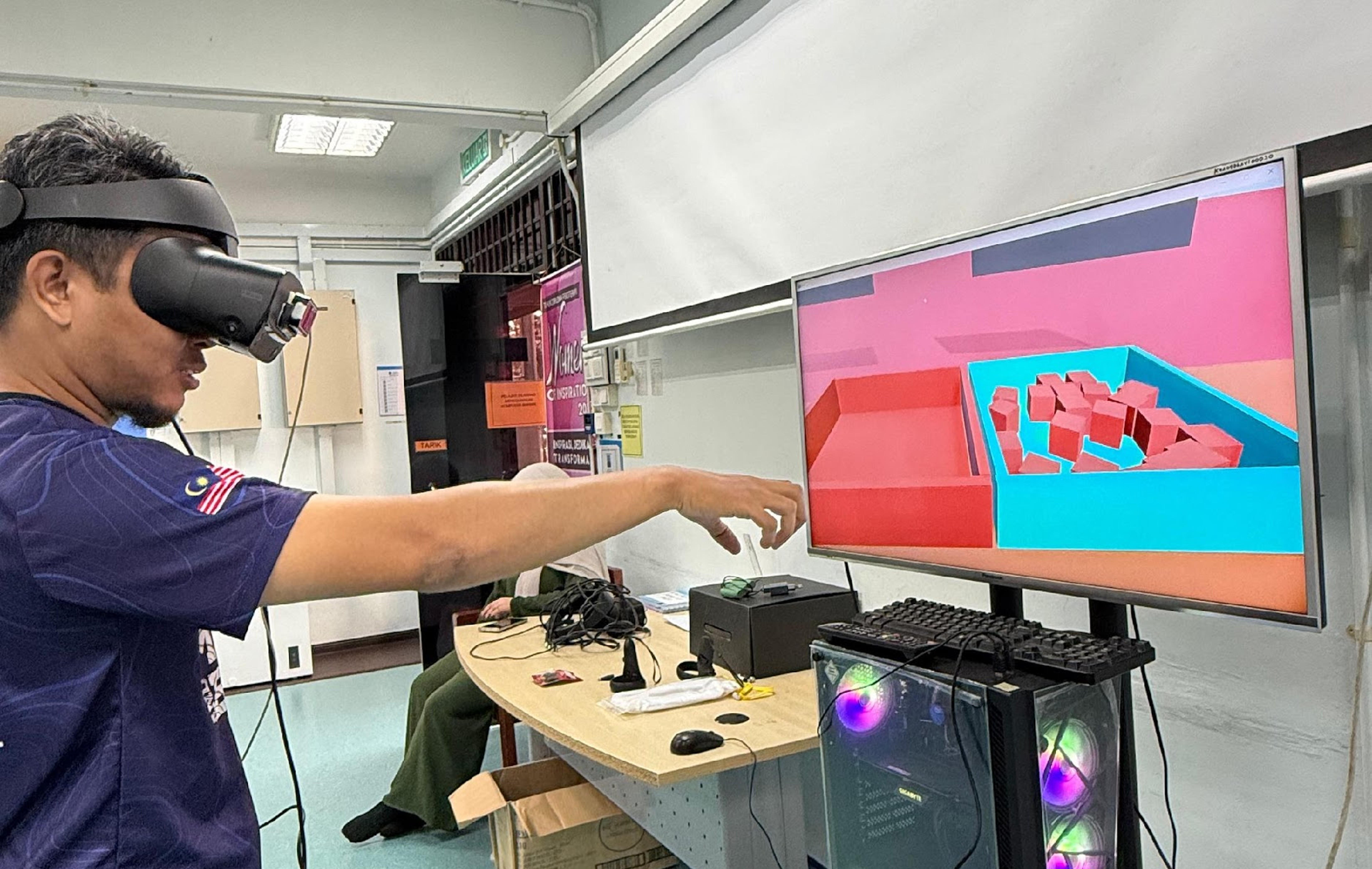
Stroke survivor participating in VR mirror therapy to enhance motor control and reduce pain perception.
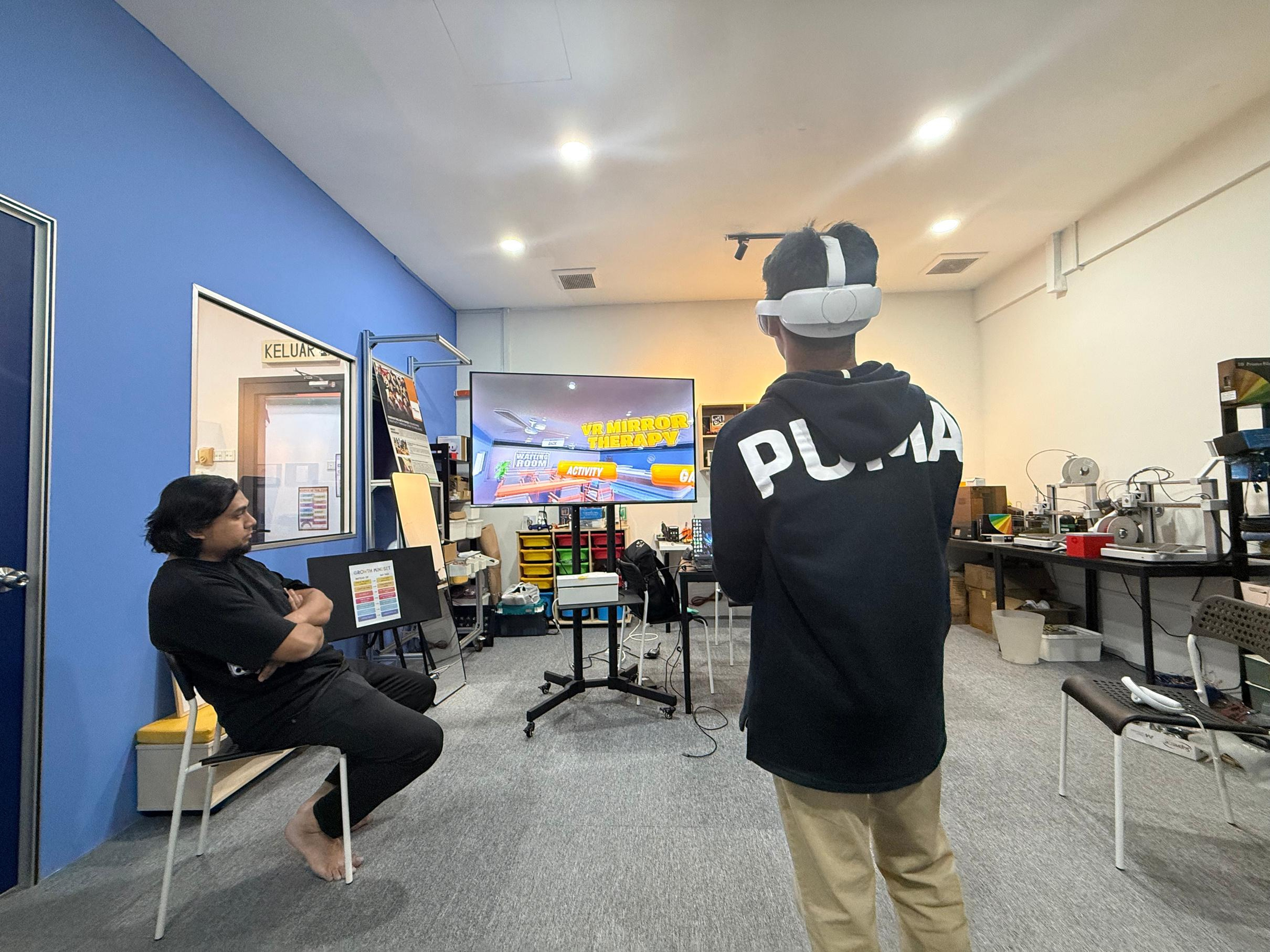
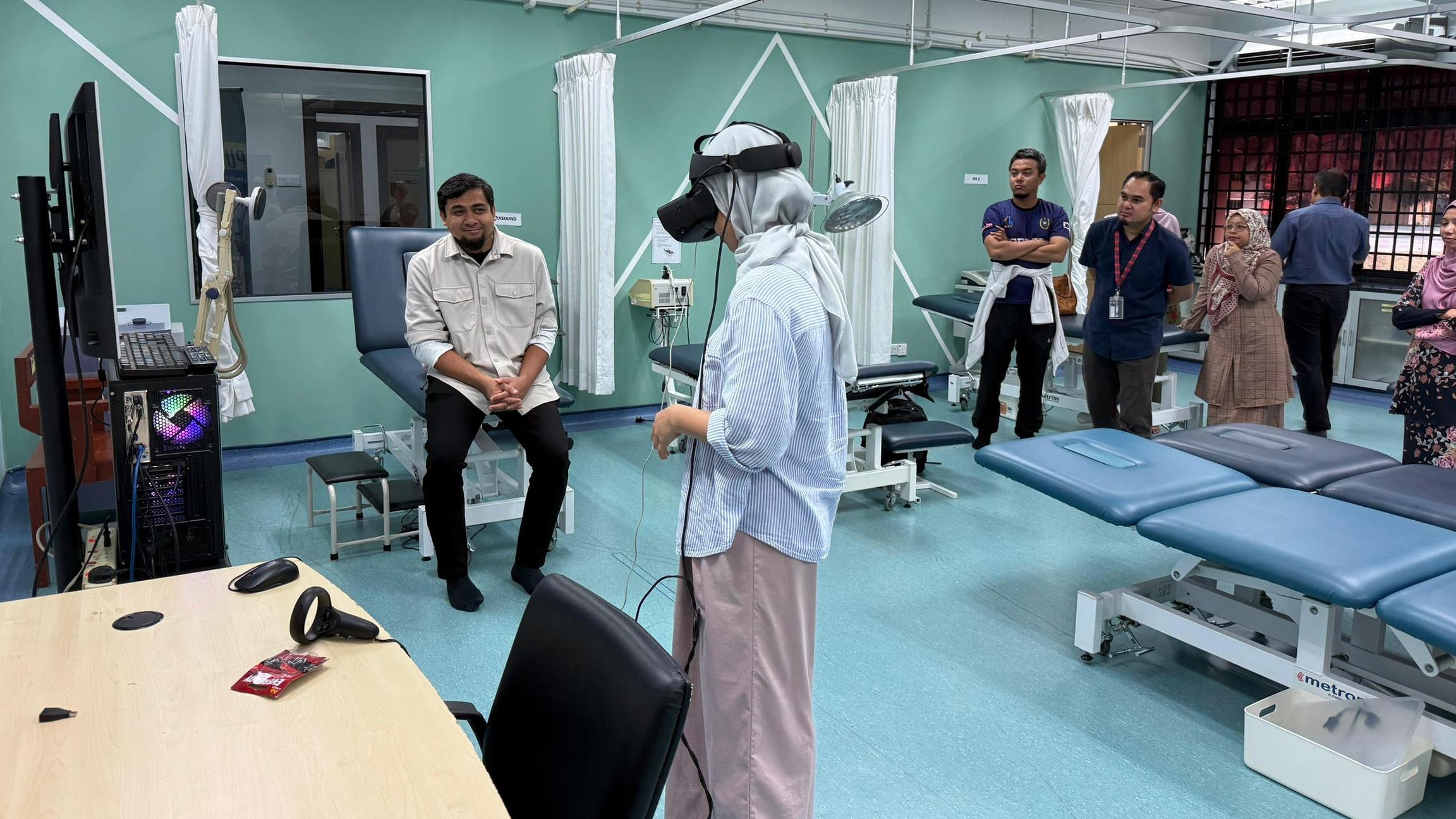
Equipping physiotherapists and occupational therapists to operate VR pain relief hardware independently.
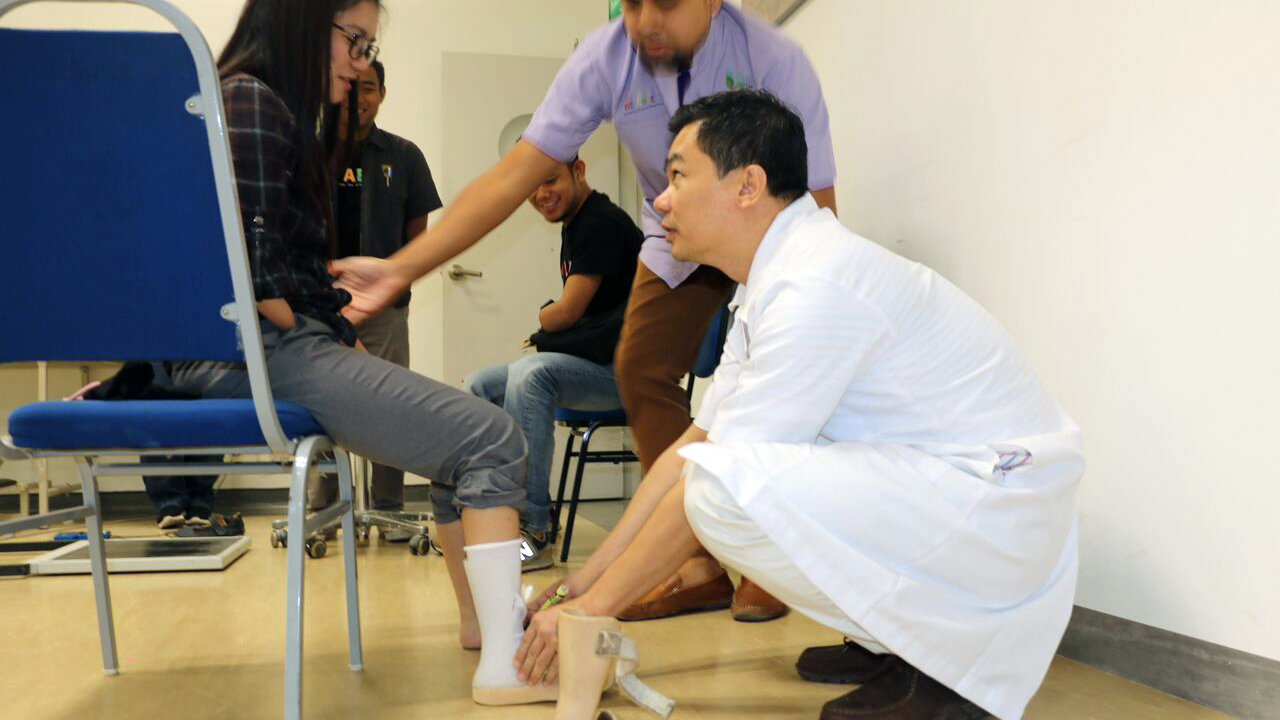
UniSZA health science lecturers testing module interaction flows and ergonomic parameters.
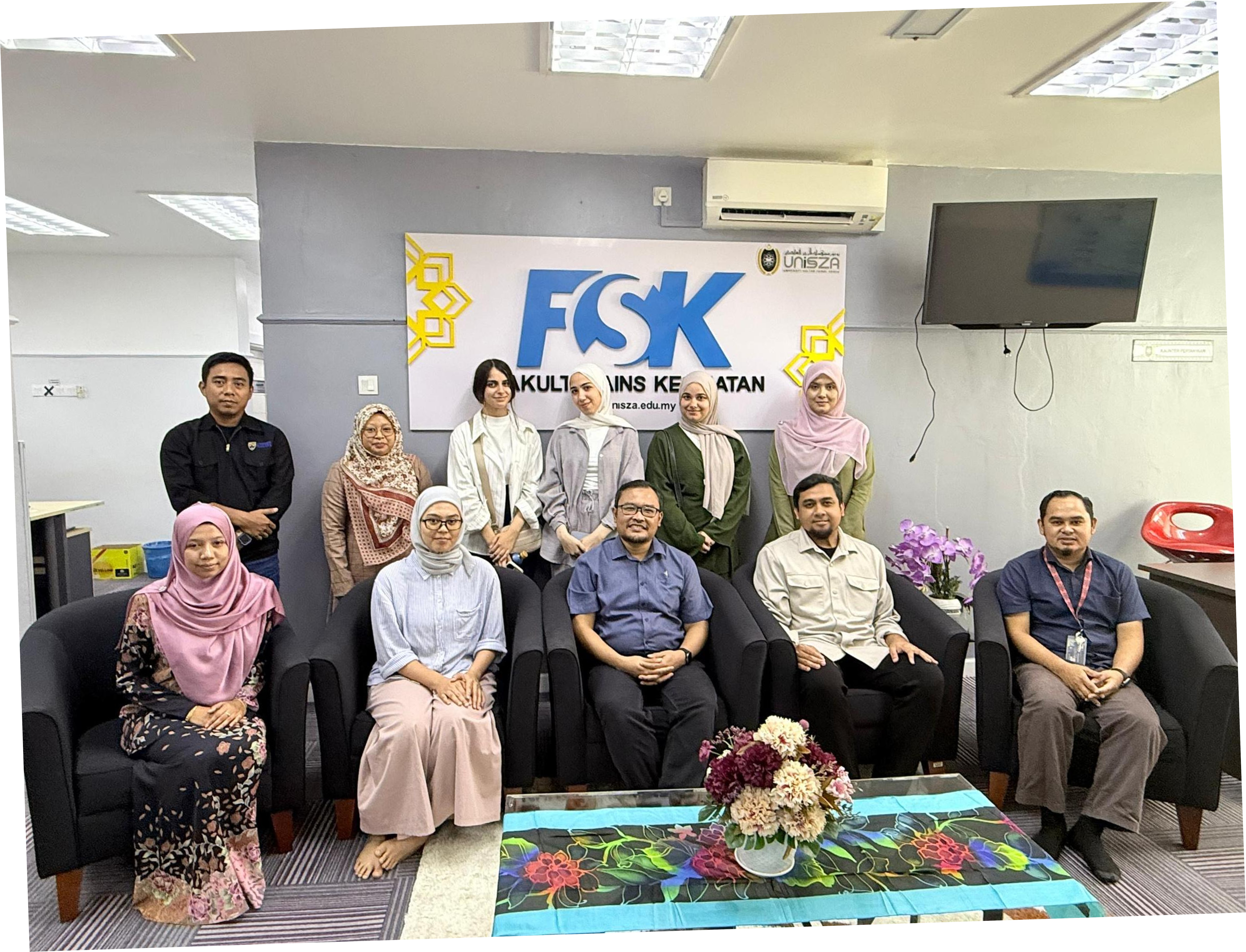
Evaluating non-pharmacological VR pain relief for chronic kidney disease patients during dialysis.
| Strategic Component | Pillar Leader | Key Focus Area |
|---|---|---|
| BeABLE Flagship Initiative | Assoc. Prof. Ir. Dr. Nasrul Anuar bin Abd Razak | Multidisciplinary Coordination, Policy & Holistic PwD Empowerment |
| Pillar I: Assistive Technology | Assoc. Prof. Ir. Dr. Nasrul Anuar bin Abd Razak | Prosthetics, Orthotics, Biomechanics & Autonomous Care Skills |
| Pillar II: VR Pain Relief | Dr. Nur Afiqah Hashim | VR Mirror Therapy, Immersive Distraction & Rehabilitation TOT |
| Pillar III: Psychosocial & Policy | Caregiver & Clinical Support Team | Caregiver Guidance, Disability Rights, Forums & Peer Circles |
Non-pharmacological VR pain distraction, mirror therapy, and improved motor recovery for stroke and chronic pain patients.
Empowering PwD with assistive technologies, functional independence, dignity, and active social inclusion.
Multi-institutional collaboration between UM, UniSZA, HoSZA, PERKESO, Dialysis centers, and Wariscan.
Watch how non-pharmacological VR solutions and assistive technology education transform patient rehabilitation routines.
Last Update: 16/08/2026