
• Universiti Malaya Community Engagement Centre (UMCares)
  • umcares@um.edu.my
  • 03-79677357
logo
logo
UNIVERSITI MALAYA COMMUNITY ENGAGEMENT
MyRA ASSESSMENT
★ ★ ★ ★ ★
3-STAR RATING
POSTHARVEST PHYSIOLOGY FOOD SUSTAINABILITY

Optimising Postharvest Handling of Fresh Vegetables

Bridging the agricultural information gap by empowering villagers with scientific techniques in washing, packaging, and processing to improve shelf life and quality of life.
Lead: Prof. Dr. Chandran Somasundram
Faculty: Institute of Biological Sciences, Faculty of Science
Fresh Vegetable Handling
50% Shelf Life Increase
100% Community Involvement
RM 29k Project Allocation
4 Core Training Sessions

Our Research Team


Project Leadership

Professor Dr. Chandran Somasundram
Postharvest Physiology and Biotechnology Lab

Technical Support

Postharvest Lab Members
University of Malaya Research Team

The Objective

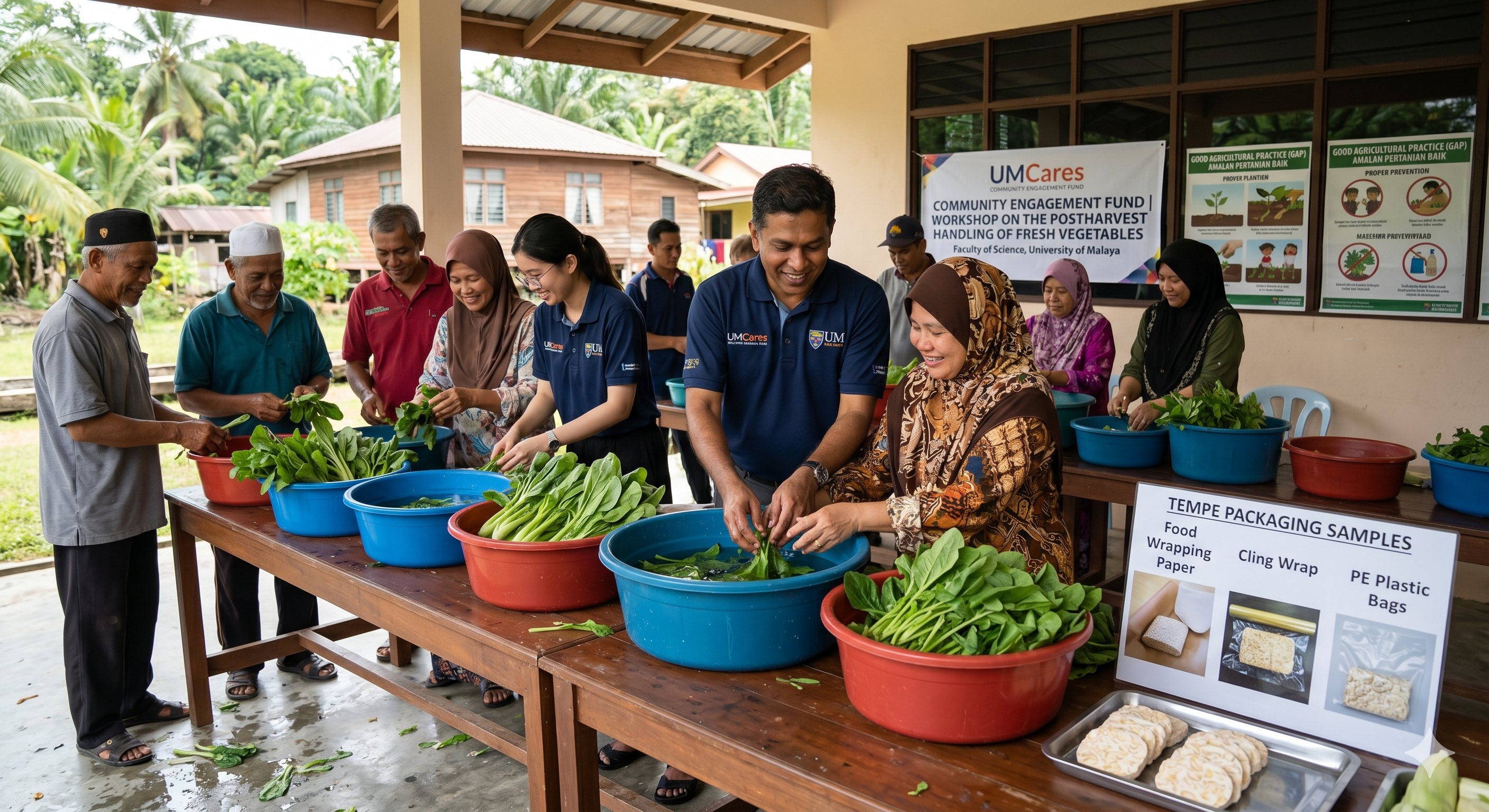
To address ineffective agricultural practices by empowering villagers with a scientific skill set. The workshop focused on three critical pillars: Good Agricultural Practice (GAP), tempe production and packaging, and proper washing techniques for vegetables to ensure food safety and increase community income through reduced postharvest loss.

Strategic Engagement

The community was consulted through six separate visits prior to implementation to tailor the program to their specific needs. Local leaders, including the 'Ketua Kampung', demonstrated ownership of the project by assisting in site preparation and mobilizing participants for hands-on technical sessions.

Outcomes & Improvements


🥦
Tempe Shelf-Life Extension Suggested packaging methods increased the shelf life of freshly made raw tempe from 4 days to 6 days.
🧴
Proper Washing Protocols Introduced drying and packaging methods proven to prolong the shelf life of delicate vegetables and tubers.
🎓
Youth Science Inculcation Simultaneous educational games for children, including mini volcano making and habitat identification.
Yield Maximization Implementation of progressive bottle farming techniques, including suspended systems to maximize space.
🛡️
Infection Prevention Trained participants in field equipment cleaning techniques to prevent the spread of crop-destroying infections.
💹
Cost Savings Consistent 1/3 to 2/3 reduction in expenses through better self-management of agricultural resources.

Global Goal Alignment

This postharvest initiative contributes to global food security by reducing waste and empowering rural economic sustainability.
SDG 1: No Poverty SDG 2: Zero Hunger SDG 12: Responsible Consumption SDG 17: Partnerships

Last Update: 06/05/2026